
How Soccer Match-Fixing Actually Works (Explained for Beginners)
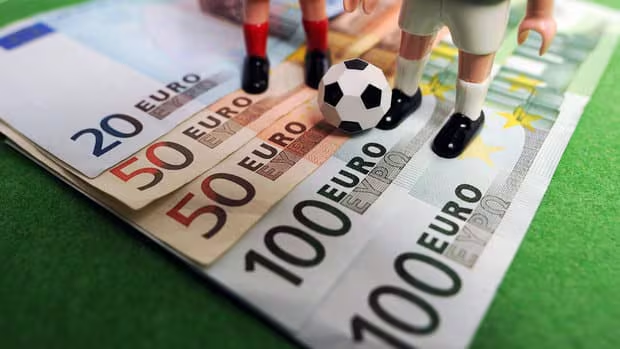
How soccer match fixing works is one of the biggest hidden dangers in sports betting. Many new gamblers believe every match is fair—but that’s not always true.
In this guide, we break down how match fixing actually works, based on a real-life story from a former professional footballer. If you’re new to betting, understanding this can help you avoid costly mistakes.
What Is Match-Fixing?
Match-fixing is when players, referees, or officials manipulate the outcome of a game for financial gain.
There are two main types:
1. Match Fixing
This involves controlling the final result:
- Losing a match on purpose
- Ensuring a specific scoreline
2. Spot Fixing (More Common)
This focuses on small moments in a match:
- Conceding a goal early
- Getting a yellow card
- Making intentional mistakes
👉 Spot fixing is harder to detect and happens more often.
How Players Get Involved
Most players don’t start by cheating. It usually begins with an approach:
- A teammate or contact introduces them to a fixer
- They are offered large sums of money
- The request is simple (e.g., “lose this match”)
At first, many players refuse. But over time, things change.
Grooming Process
Fixers slowly build trust by:
- Offering small favors or money
- Creating relationships
- Applying subtle pressure
Eventually, the player becomes comfortable with the idea.
Why Players Agree to Fix Matches
Several factors influence their decision:
- 💰 Low salaries (especially in lower leagues)
- 📉 Career uncertainty
- 👥 Peer pressure from teammates
- 🎯 Easy money with low effort
For example, a player might earn $1,000 per week—but be offered $10,000 for one action in a game.
How Match-Fixing Syndicates Operate
Match-fixing is usually controlled by organized crime groups.
These syndicates are highly structured:
- Boss – rarely seen
- Middlemen – communicate with players
- Runners – deliver cash
- Analysts – study teams and betting markets
They often operate internationally and use:
- Messaging apps (Telegram, Skype)
- Code words or emojis
- Cash payments in bags
How Matches Are Manipulated
Fixers don’t need the whole team.
Sometimes:
- Only 1–3 players are enough
- Key roles like defenders or goalkeepers are targeted
Example Instructions:
- “Concede 2 goals before halftime”
- “Get a yellow card in the first 10 minutes”
- “Play defensively to allow pressure”
These actions influence betting markets without making it obvious.
Why Match-Fixing Is Hard to Detect
From a fan’s perspective, everything looks normal:
- Players make mistakes
- Missed chances happen
- Defenders slip
👉 Football is unpredictable by nature, which helps hide corruption.
Even experts rely on:
- Betting market movements
- Data analysis
- Suspicious patterns
But proving match-fixing is still very difficult.
The Role of Betting Markets
Fixers make money through betting:
- They place large bets on known outcomes
- Use multiple accounts or intermediaries
- Target markets with less regulation
💡 Example:
Instead of betting on a win, they might bet on:
- “Goal before halftime”
- “Player to receive a card”
These are easier to manipulate.
The Risks and Consequences
Many players think they won’t get caught—but the risks are serious:
- 🚔 Arrest and criminal charges
- ⛔ Lifetime bans from football
- 💔 Damage to teammates’ careers
- 😔 Personal regret and mental stress
Even one fixed match can destroy a career.
What This Means for New Gamblers
If you’re new to sports betting, here are key takeaways:
- ❌ Not every match is completely fair
- ❌ Odds don’t always reflect true probability
- ❌ Lower leagues are more vulnerable
But also:
- ✔️ Major leagues are heavily monitored
- ✔️ Betting patterns are tracked using data
- ✔️ Most matches are still legitimate
Final Thoughts
Match-fixing exists because of:
- Money
- Opportunity
- Weak regulation in certain leagues
For bettors, the best approach is to:
- Stay informed
- Avoid suspicious markets
- Focus on well-regulated competitions
Understanding how match-fixing works gives you an edge—and helps you avoid becoming part of the losing majority.